
My Reflections from Renovating Somerville Adventure Playground
‘Their imaginations are wild,’ the Project Manager, Kevin, remarked as we added the finishing touches to one of Somerville Adventure Playground's newest platforms. ‘I can see them using it as a hideout. Or maybe they'll swing from this beam, carve their names into it. Maybe they'll trade things here, or play cards and gossip, or shelter from the rain – and from us adults.’
We had just finished building what looked, at first glance, like a fairly straightforward platform connecting the ground to the higher structures. But as Kevin suggested, by the end of the summer it might become a stage, a meeting point, a place of respite, a lookout, or something neither of us could yet anticipate. Ultimately, its purpose would not be decided by those of us who built it, but by the children who came to use it.
This conversation stayed with me throughout the eight weeks I spent volunteering with London Play Design (LPD), helping to rebuild the playground. Tucked away behind a busy road, Somerville has been part of the local community since 1971. Although it took me a few attempts to locate it, for the families who use it, the playground is anything but hidden - it is a place where generations of children have grown up, and where play is free in every sense of the word.
Working alongside Kevin, Founder and Director Max, and the rest of the team, I quickly realised the project’s intention extended far beyond simply constructing safe structures. Every measurement was checked, every recut plank carefully fitted, and every stepping stone thoughtfully spaced, all accompanied by an eclectic soundtrack of R&B, house music, and Japanese reggae, as well as a seemingly endless supply of Jaffa Cakes. However, what emerged from such precision was never rigidity nor authorship - the structures weren't built to tell children what to do or how to play, rather, they were designed to withstand being climbed, adapted, reinvented, and reimagined.
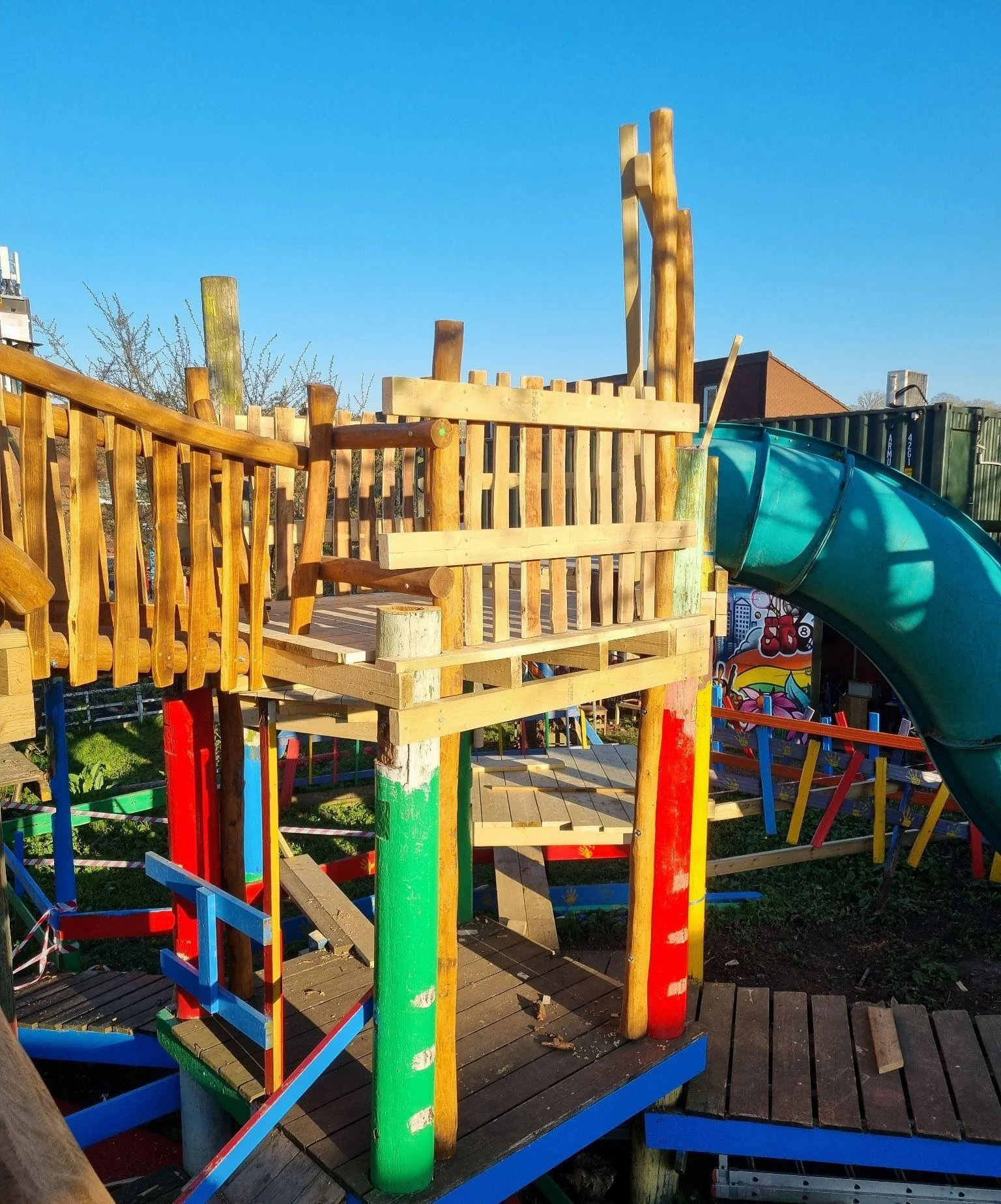
Figure 1: Part of the newly constructed play structure at Somerville.
As the playground took shape, I often reflected on the role of the designer, and found myself thinking of Manzini’s concept of diffuse design: the idea that the ability to design does not belong solely to architects or professionals, but is something we all do whenever we creatively respond to the world around us.1 Whilst ‘expert designers’ still matter, their role is not to dictate finished solutions, but to create the conditions for others - like children - to shape and make meaning from the plurality of environments around them: a philosophy made visible throughout the rebuild.2 Timber was left to weather, decorate or carve into; loose materials waited to become makeshift dens or new additions; existing flowerbeds and green spaces were maintained and incorporated; and certain features were deliberately left unfinished for children to complete themselves, such as the elephant slide (Figure 2 and Figure 3). The structures felt suggestive rather than prescriptive, offering possibilities without directing outcomes, and in doing so, respected children as designers by granting them an agency over how the spaces were to be used.

Figure 2: Somerville’s finished elephant slide.
In many ways, this felt like a quiet challenge to how we are often taught to think about modern design, with contemporary playgrounds sometimes becoming exercises in risk minimisation through subtly scripting children's play with neat safety surfacing and enclosed sterile metal structures, and the obligatory lone spinning plate. My time at Somerville, however, taught me that instead of asking, How can we design for children?, it may be more productive to ask, How can we design, so that children can design too?
When we understand children as designers in their own right, the benefits extend far beyond play itself. Open-ended and free-play environments encourage children to negotiate with one another, solve problems, assess risk, practice resilience and self-efficacy, develop creativity, and invent (and abandon) their own rules.3 By creating spaces that are not fully determined in advance, children are not simply users of these environments, but become active participants in shaping them. This not only supports more creative and resilient future generations, but also aligns closely with the spirit of the UN Convention on the Rights of the Child, recognising not only children’s right to play, but their right to participate in shaping the spaces that affect them.4
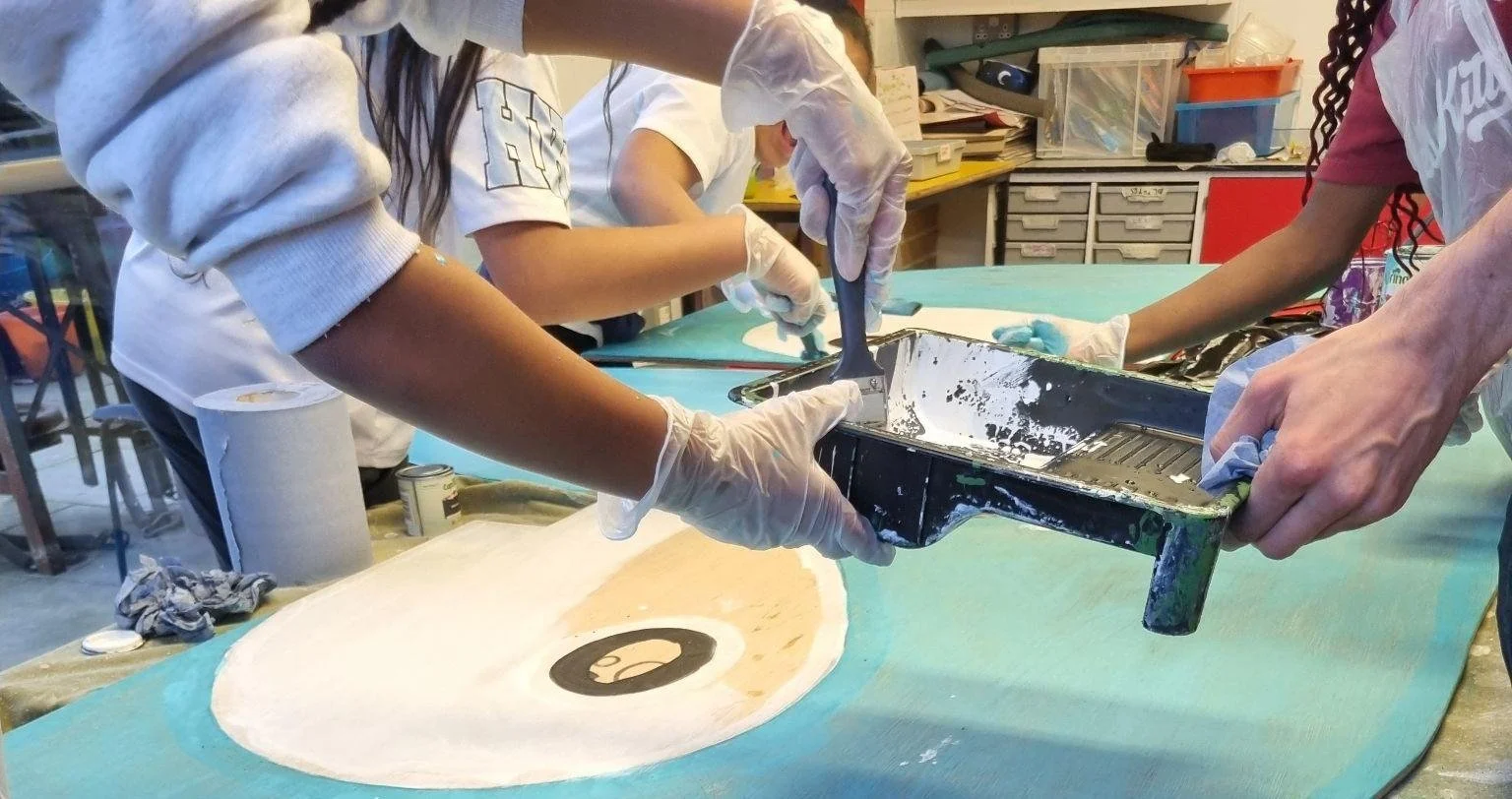
Figure 3: Elephant slide in the works.
Looking back, even while helping to build the playground I too was trusted to make mistakes, correct them, and learn from the process. I learnt not only how to sand and stain a handrail, operate an angle grinder, and build a footbridge - gaining a newfound appreciation for the humble spirit level in the process - but my time at Somerville also quietly reinforced how I think about design itself. Good design is not always about anticipating every possible outcome; sometimes, it is about resisting that temptation altogether.
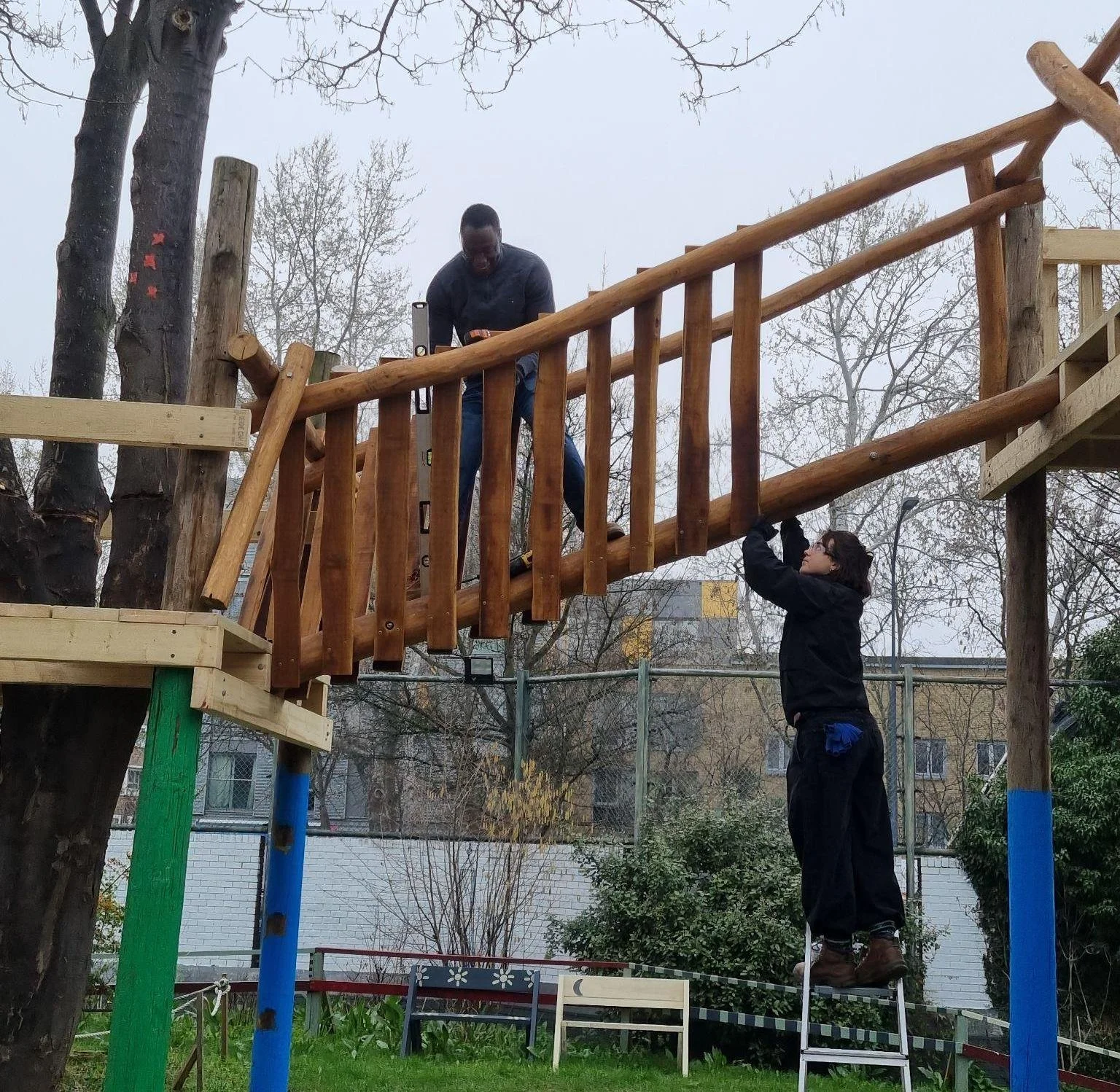
Figure 4: Working on the footbridge with fellow volunteer, Denzel.
-
Brussoni, M., et al., 2015. ‘What is the relationship between risky outdoor play and health in children? A systematic review.’ International Journal of Environmental Research and Public Health, 12(6), pp. 6423-6454.
Davey, C. and Lundy, L., 2011. ‘Towards greater recognition of the right to play: An analysis of article 31 of the UNCRC.’ Children & Society, 25(1), pp. 3-14.
Escobar, A., 2018. Designs for the Pluriverse: Radical Interdependence, Autonomy, and the Making of Worlds. Duke University Press.
Lester, S. and Russell, W., 2010. ‘Children's Right to Play: An Examination of the Importance of Play in the Lives of Children Worldwide.’ Working Papers in Early Childhood Development, No. 57. Bernard van Leer Foundation. PO Box 82334, 2508 EH, The Hague, The Netherlands.
Lundy, L., 2007. ‘“Voice” is Not Enough: Conceptualising Article 12 of the United Nations Convention on the Rights of the Child.’ British Educational Research Journal, 33(6), pp.927-942.
Manzini, E., 2015. Design, When Everybody Designs: An Introduction to Design for Social Innovation. MIT press.
Sandseter, E.B.H. and Kennair, L.E.O., 2011. ‘Children's risky play from an evolutionary perspective: The anti-phobic effects of thrilling experiences.’ Evolutionary Psychology, 9(2), pp. 257-284.
Wyver, S., Tranter, P., Naughton, G., Little, H., Sandseter, E.B.H. and Bundy, A., 2010. ‘Ten ways to restrict children's freedom to play: The problem of surplus safety.’ Contemporary Issues In Early Childhood, 11(3), pp. 263-277.
