Stewarts Road Adventure Playground: A Community
Led Regeneration Case Study
For generations, Stewarts Road Adventure Playground has given local children a place to play, explore and spend time together. But in recent years, the site had fallen into disrepair, leaving parts of the playground unsafe or unusable. With support from London Play Design (LPD) and volunteer teams from Informa, the playground has begun to come back to life. Repairs have reopened spaces that had been lost, new structures have been built, and volunteers have helped create a safer and more welcoming environment for local children and families.

1. General Context
1.1 London Play Design (LPD)
London Play Design works to support high‑quality, inclusive outdoor play spaces across London in close collaboration with local organisations, firms, and government branches. LPD also coordinates volunteer programmes with corporate partners, providing technical guidance, tools, and on‑site supervision so that large‑scale repairs and improvements can be carried out safely and sustainably.
1.2 Adventure playgrounds
Adventure playgrounds, unlike conventional playgrounds, emphasise unstructured activity, creativity and managed risk‑taking. Three principles are widely regarded as central to adventure playgrounds: freedom from charge, freedom of access, and freedom to choose – enabling children to shape their own activities and social interactions.
2. The Playground: History and Role
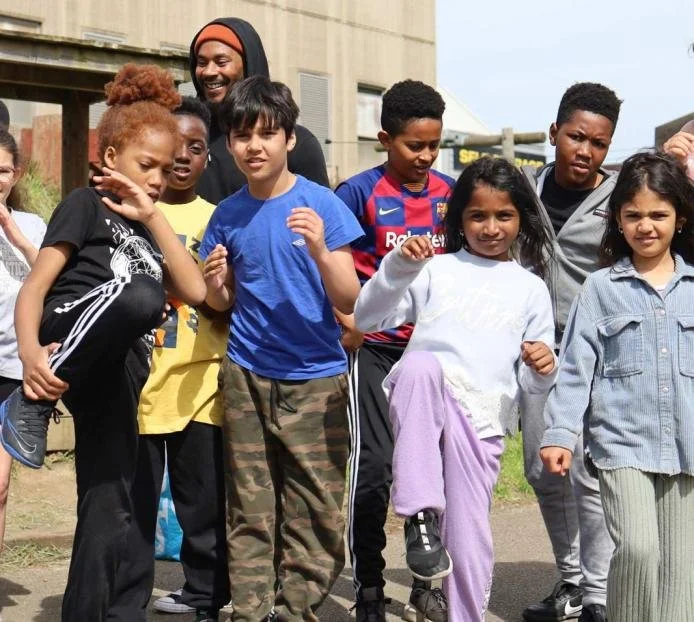
Stewarts Road Adventure Playground was first established in the late 1960s as a response to large‑scale redevelopment in the Nine Elms area. At the time, many families in South London had limited access to safe outdoor play spaces. The playground offered a creative, free‑form environment where children could move beyond the constraints of flat living and busy streets.
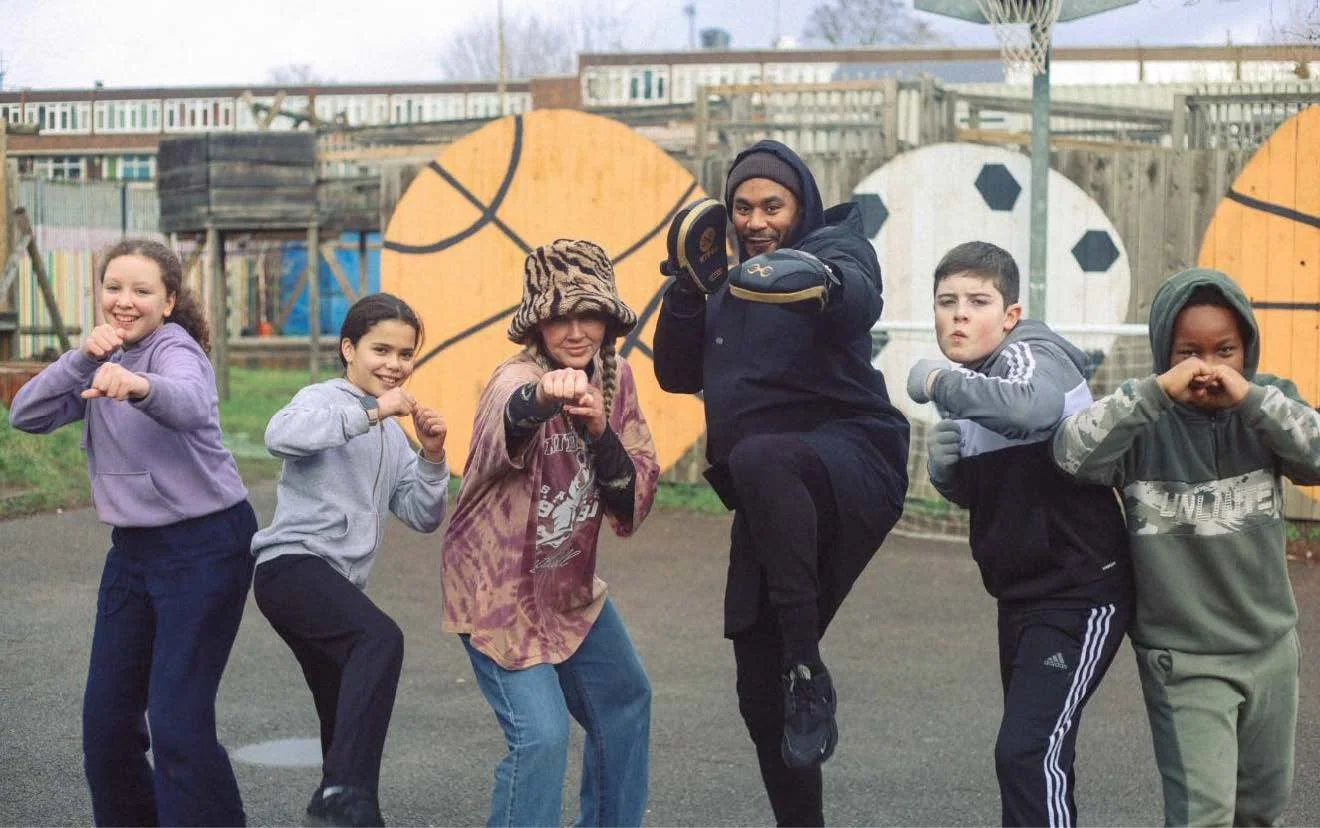
Today, the site is managed by Big Up Communities, a not‑for‑profit organisation offering free activities and holiday programmes for young people aged 8 to 21 and their families. For many families living in flats without gardens or access to private outdoor space, the playground functions as an extension of the neighbourhood itself. As Kevin, Community-Based Project Manager at London Play Design, reflected, there are likely people living nearby who used to play there when they were kids. Stewarts Road is not simply a recreational facility but a social anchor — a place woven into daily routines, friendships, and long‑term community memory.
3. Why Work Was Needed
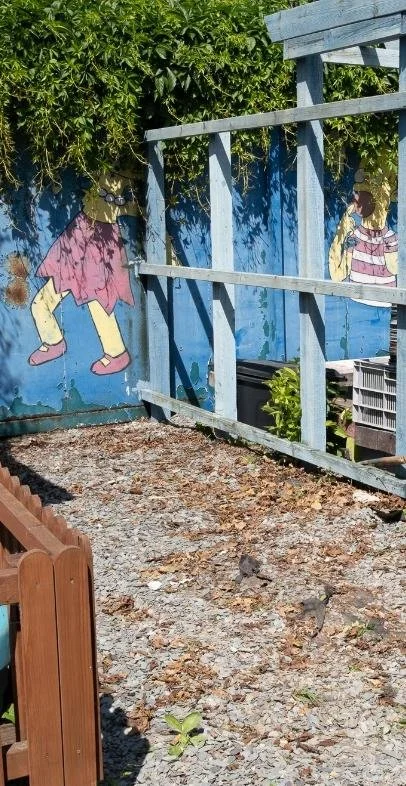
By 2024, significant parts of Stewarts Road had become seriously degraded. The roof of the main building had been leaking for an extended period. Without a functioning roof, indoor programming had to be suspended, restricting activities to dry days and warmer months. Play structures were worn down, fall zones no longer met safety standards, and ivy and overgrowth had begun to obscure murals and reduce visibility across the site.
Spaces that might once have been adapted, built upon or reimagined by children became harder to use. Although the playground remained deeply valued by local families, its physical condition increasingly limited what children and staff could safely do within it, meaning some of the playground’s key spaces fell out of use altogether.
4. The Process: What Was Done and How
Between September and October 2025, 73 Informa volunteers took part across five volunteer days, working alongside London Play Design staff on the site. Two additional volunteer days were also held in May. The project remains ongoing, with further creative and structural improvements planned.
The work began with a detailed assessment of the site. According to Kevin, several older structures had been identified through inspection reports as unsafe and no longer fit for use. As a result, the first phase of the project involved demolishing deteriorated equipment and clearing space for new development. Working alongside LPD designer Aidan and Stewarts Road staff, the team carried out consultations before designing a new play structure that could be constructed gradually across the volunteer programme.
Importantly, the aim was not simply to replace old equipment with new equipment. As Kevin explained, adventure playgrounds are ‘never really finished’; they are intended to evolve over time in response to children's interests and ideas.
Over the course of these volunteer days, teams cleared dense ivy, laid new bark under the swings, installed high support beams, and prepared surfaces for future mural work. Noticeboards assembled on one day were installed on the next, each group built upon what the previous one had completed.
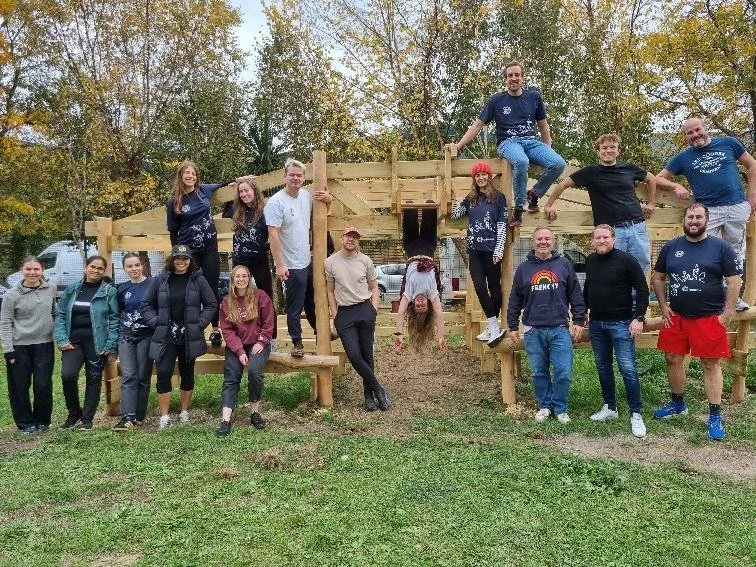
The new monkey bars structure — which required assembling ladders, installing cross‑beams, and securing the frame — was one of the more complex builds. It was completed gradually by groups who often had not worked together before. One volunteer reflected:
“It’s been really, really nice to sort of see the changes and actually have a part in that change. To be able to say that we’ve been part of creating something that I know from personal experience is going to make a huge difference to children in this community — it’s just been awesome.”
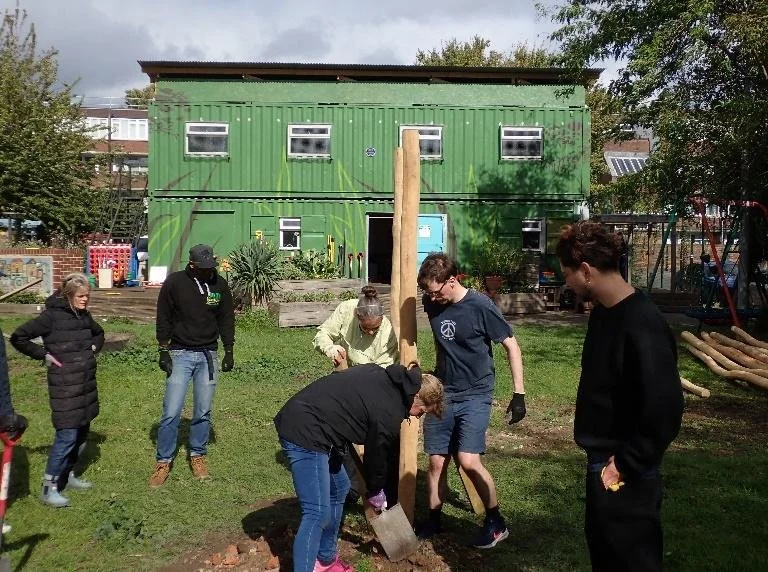
* During (left) and after (right) the construction of the new monkey bars structure.
Not every participant arrived with practical building experience, yet the work was collective and cumulative. Volunteers painted long sections of wall, removed layers of mud from pathways, and cleared weeds from around fences and play areas.
“Today’s my third day here,” another team member noted. “And a couple of the team behind me have been here two or three times as well.”
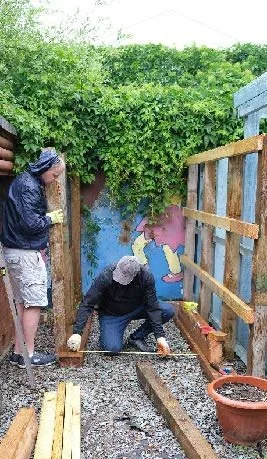
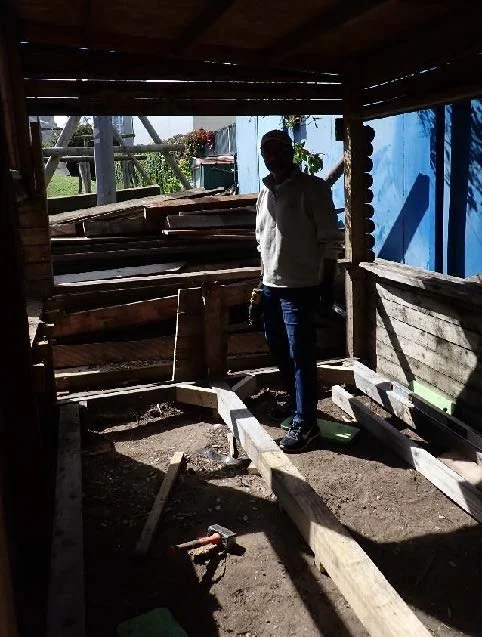
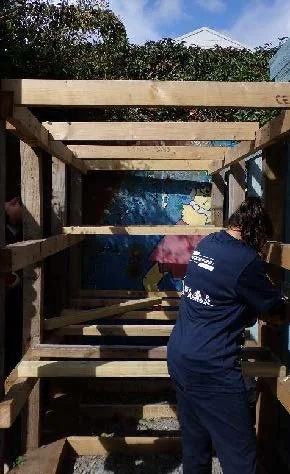
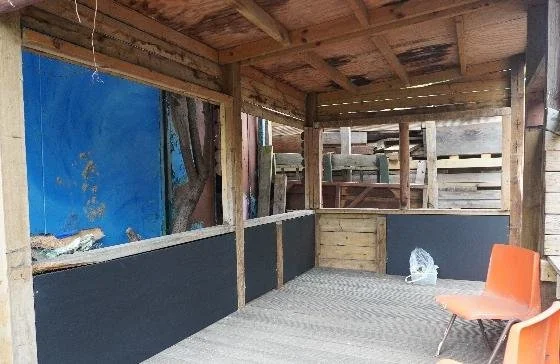
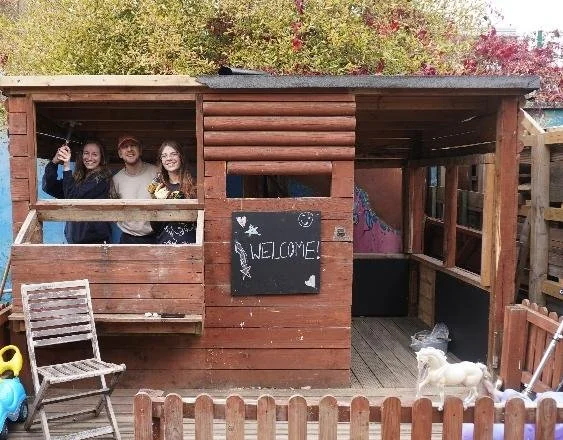
* Before (left), during (top right), and after (bottom right) the construction of the cabin.
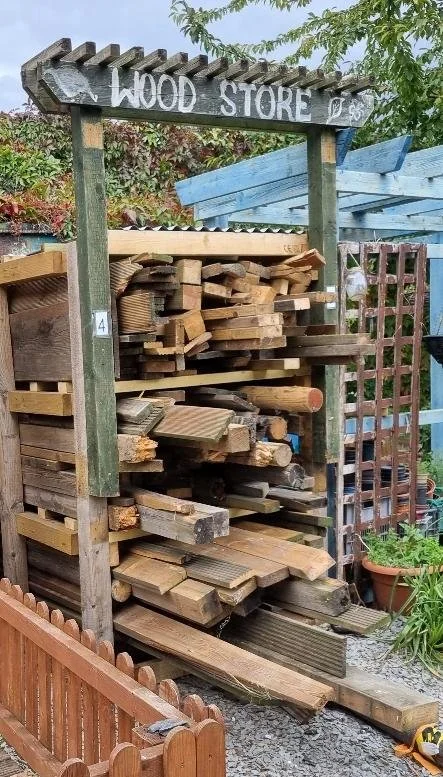
* The process of building the wood store (left to right).
The project also developed into a longer-term partnership rather than a one-off intervention. Following the initial programme, Informa committed to additional volunteer days and further support for the playground, including contributions towards future creative projects. This ongoing relationship has helped ensure that improvements to the site continue beyond the original construction phase.
5. The Impact
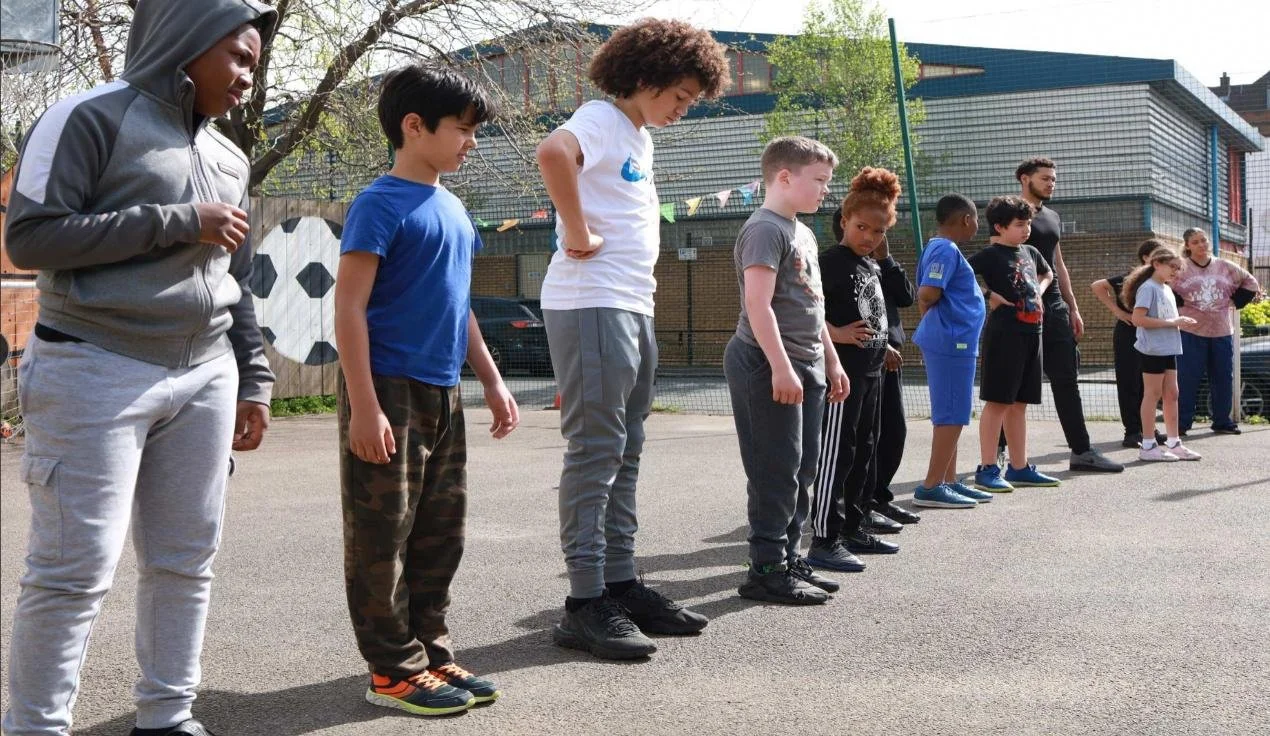
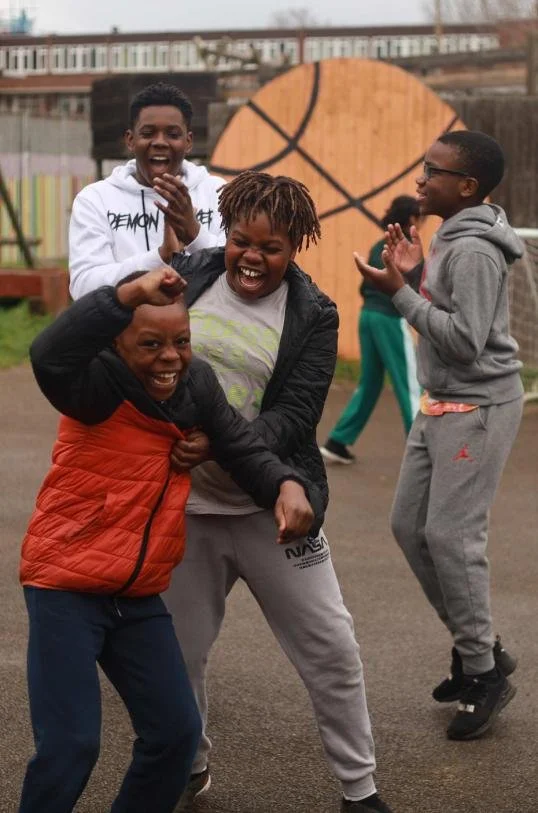
Thanks to the team, the repaired roof enabled indoor activities to return for the first time in months. Children now play under structures that meet safety standards, while open areas once choked by overgrowth are usable again. Without this playground, they would be lost in ‘computer games’ and ‘PS5(s)’ or simply forced to stay ‘at home … , bored’. The first-floor space can now also be rented out by Big Up Communities, allowing for income generation that strengthens the site’s long-term sustainability.
Beyond the visible improvements to the site, the process also left a meaningful impression on the volunteers themselves. For many, the experience brought back memories of their own childhoods — of playing freely, building things, and spending time outdoors in spaces that encouraged imagination and movement. Working together in this setting fostered a strong sense of camaraderie among the team. It offered not only the opportunity to contribute to something tangible, but also the chance to develop practical skills many had never encountered before. Above all, volunteers expressed a genuine feeling of purpose: that they were protecting a space that would continue to serve children and families long after the workday ended.
Furthermore, the playground also serves as something far greater than a set of structures: it is a social node, a place where relationships form and local life becomes visible.
‘Without London Play Designs support we would have had to close the playground whilst we raised repair costs. … The corporate volunteers and community payback have achieved so much in such a little time. … I genuinely feel that together nothing is impossible and can not express how grateful we are.’ – Ryan Hyacinthe (Youth Hub Coordinator at Stewarts Road Adventure Playground)
On any given day, one might find children improvising games, parents exchanging news, and staff members guiding both play and care. It is a point where intergenerational, intercultural, and inter-neighbourhood interactions naturally unfold. Stewarts Road Adventure Playground is valued by the local children for the ‘outdoor activities’ it offers, but even more, a chance to ‘meet new people’. Visually, too, the site offers something rare in London’s urban fabric — a place that invites imagination and unpredictability, a puzzle piece of the wilderness. In London's many corners, one might find historical sites, plaques, squirrels, and now, at Stewarts Road, an adventure playground.
Looking forward:
The Stewarts Road project also offers an alternative way of thinking about urban regeneration. In many cities, redevelopment is often associated with replacement: old spaces disappear as new buildings emerge. Stewarts Road demonstrates a different possibility. Rather than removing an existing community asset, investment was directed towards preserving and strengthening a space that local people already valued.
The project shows how regeneration can support continuity as well as change. Through collaboration between Big Up Communities, London Play Design, corporate volunteers and local users, a long-standing community resource has been renewed rather than displaced. In this sense, the project is not only about repairing structures, but about sustaining the social relationships, memories and opportunities that have made the playground important for generations of local families.